
Measure your cabinet doors first
Before you browse for modern cabinet pulls, measure your existing hardware. This step prevents a trip back to the store. Most replacements fit standard spacing, but unique layouts exist. Getting these numbers right saves you from drilling new holes.
Find the backset and center-to-center distance
The center-to-center distance is the space between the middle of the two screw holes. Use a tape measure from the center of one hole to the other. Record this in inches or millimeters. Common sizes are 3 inches, 5 inches, 96mm, or 128mm. Non-standard sizes may require custom pulls or drilling.
The backset is the distance from the cabinet edge to the screw hole center. This ensures the pull doesn't stick out too far or sit too close to the edge. Measure from the nearest vertical edge to the center of either hole; they should be equal.
Check the hole diameter and mounting style
Check the hole size. Standard screws are usually 4mm or 6mm. Oversized or stripped holes cause wobbling. Also, check the mounting style. Most modern pulls use a "through-bolt" design. Some use a "post" system. Ensure your new pull matches your cabinet's construction.
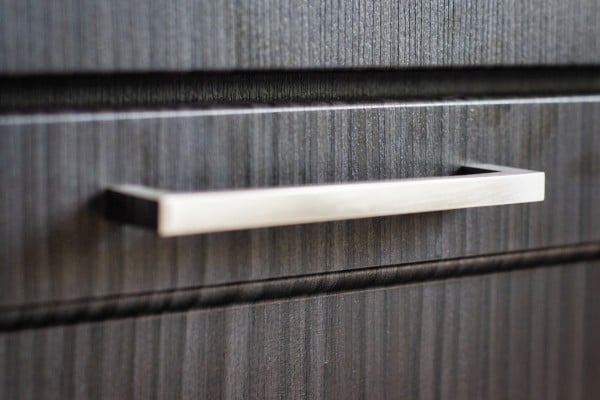
Place your tape measure at the exact center of one screw hole and extend it to the center of the opposite hole. This is your primary sizing metric. Most modern cabinet pulls are manufactured to fit standard intervals like 3 inches or 96mm.
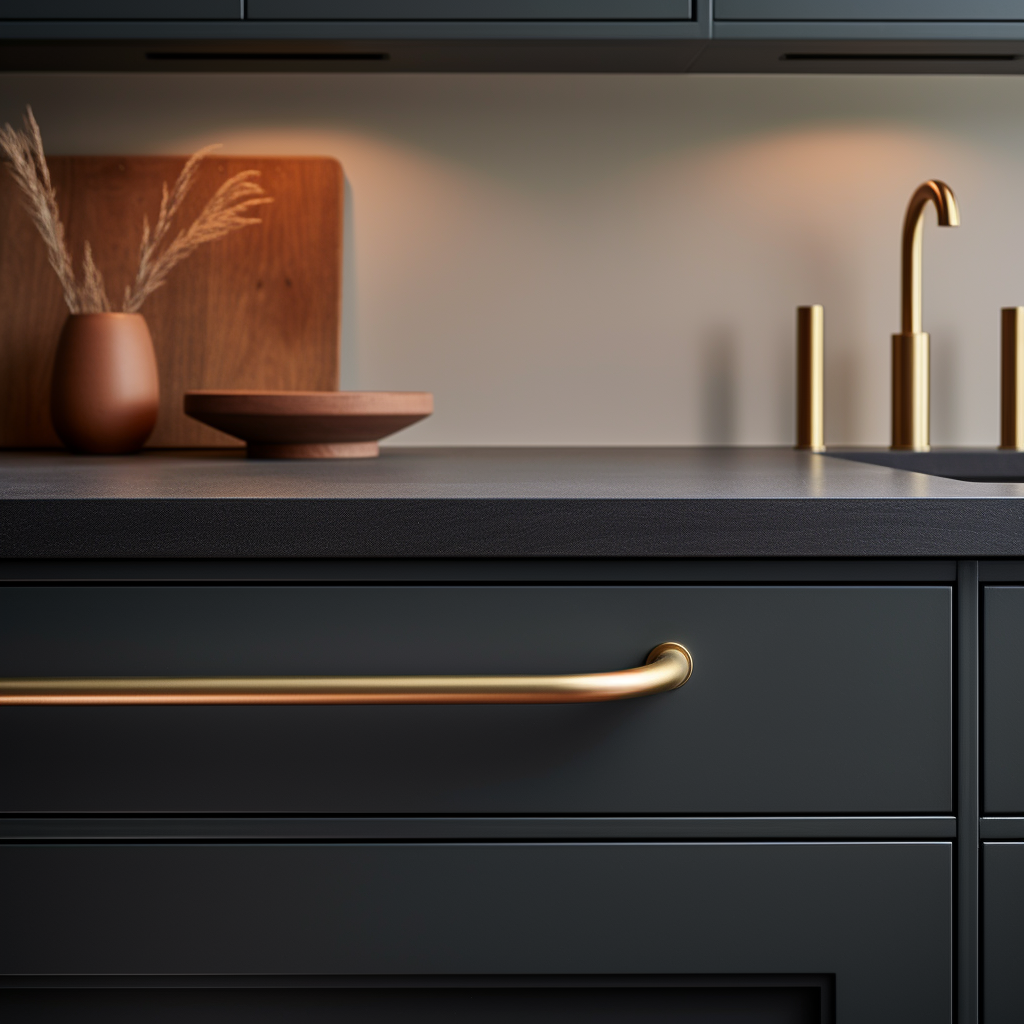
Measure from the vertical edge of the cabinet door or drawer front to the center of the screw hole. This ensures the new hardware sits correctly without protruding into adjacent cabinets or getting caught on other handles.
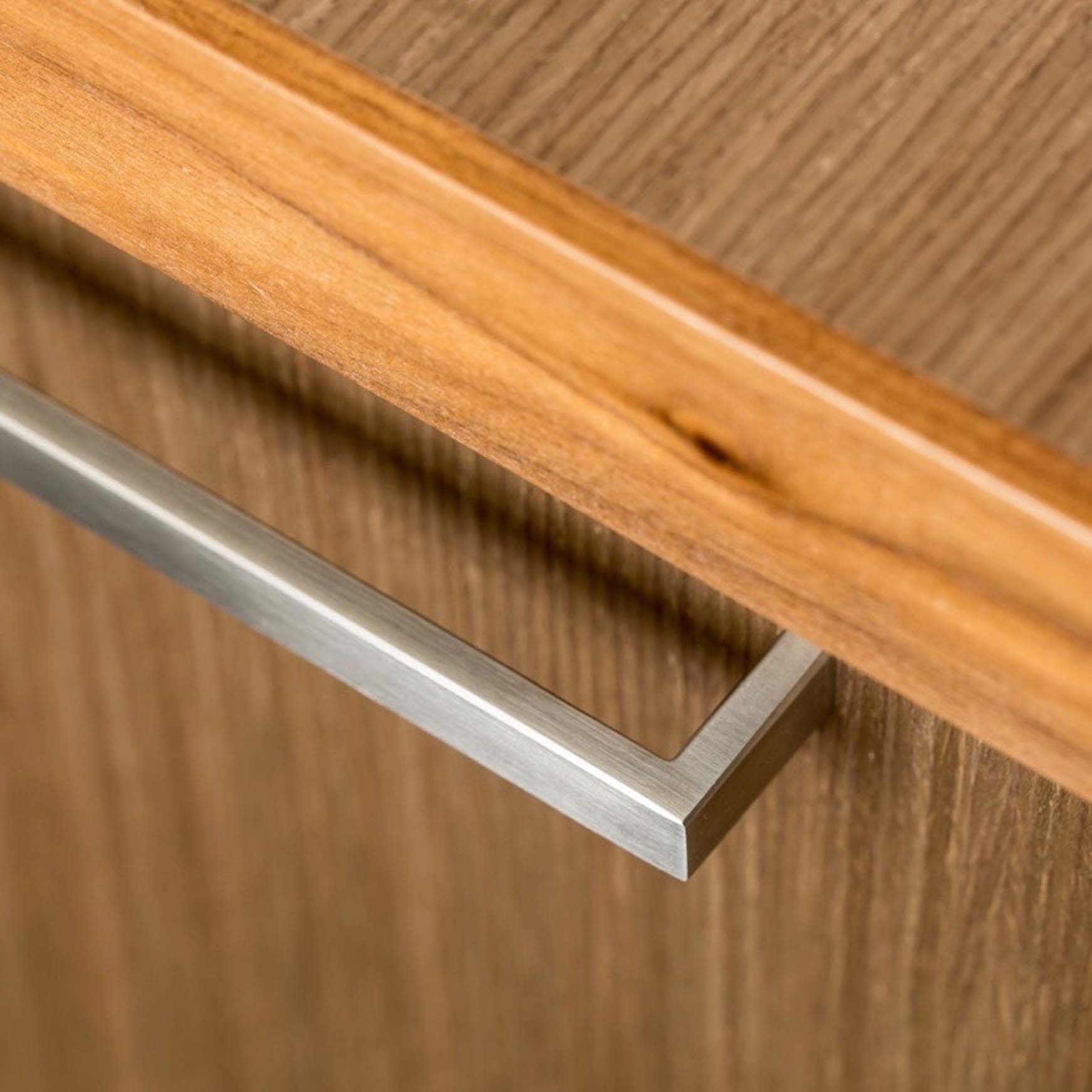
Check the width of the existing holes to ensure they match standard screw sizes (usually 4mm or 6mm). Also, determine if your cabinet uses a through-bolt system or a front-mount post system, as this dictates which new pulls will physically attach.
Pick a finish that matches your fixtures
Match your new pulls to your existing faucet and lighting fixtures. When metals coordinate, your eyes glide across the space. This doesn't mean every piece must be identical, but they should belong to the same family.
Look at your faucet and lights. If you have a matte black faucet, lean toward matte black or oil-rubbed bronze pulls. If your lighting is brushed nickel, stick with brushed nickel, chrome, or satin nickel. You can introduce a contrasting metal for an island, but keep the perimeter hardware consistent.
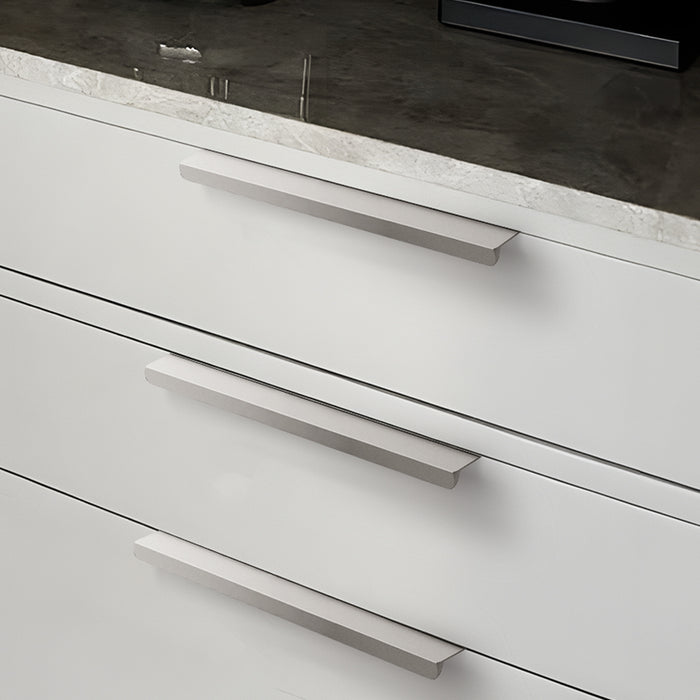
If your fixtures are mixed, choose the metal that appears most frequently. For example, if you have a brushed nickel faucet and brass bar stools, the faucet metal usually wins for the main kitchen cabinets. This prevents the space from feeling scattered.
| Finish | Best Match | Maintenance Level | Visual Weight |
|---|---|---|---|
| Matte Black | Black fixtures, industrial lights | Low (hides fingerprints) | High (bold, grounding) |
| Brushed Nickel | Nickel/chrome fixtures, modern | Medium (shows water spots) | Medium (neutral, soft) |
| Brass/Gold | Brass fixtures, warm lighting | High (shows smudges) | High (warm, statement) |
| Chrome | Chrome fixtures, classic/modern | Medium (shows water spots) | Low (cool, reflective) |
Hold a sample pull next to your faucet under kitchen lighting. Photos can be deceiving. A brushed nickel pull might look cool in a store, but warm under your specific kitchen lights. This small check prevents costly returns.
Apply the one-third rule for sizing
Think of your cabinet pulls as visual anchors. If they are too small, they get lost; if they are too large, they overwhelm the design. Use the one-third rule to find the sweet spot.
For standard cabinet doors, measure the width of the door panel. Your pull’s length should be approximately one-third to one-quarter of that measurement. For example, a 30-inch-wide door pairs best with a pull roughly 8 to 10 inches long. This proportion keeps the hardware balanced.
This rule works especially well for modern kitchen cabinet pulls, which often feature clean, linear lines. When the hardware respects the door’s geometry, it creates a cohesive look. If you are mixing handle types, stick to this ratio across the board.
Choose Between Bar Pulls and Knobs
Bar pulls are long handles you grip with your whole hand. Knobs are single points you pinch with your fingers. Both work for modern kitchens but serve different purposes.
Bar Pulls for Drawers and Large Doors
Bar pulls are the standard for drawers. The long shape gives you a firm grip, making it easy to slide heavy drawers open. They also look great on wide pantry doors. The horizontal line of a bar pull adds a clean, modern feel to flat-panel cabinets.
Knobs for Small Cupboards
Knobs shine on small cupboard doors. Because they take up less space, they don’t crowd narrow doors. They are also easier to reach when doors are stacked closely together. Many homeowners use knobs on upper cabinets and bar pulls on lower drawers to create visual balance.
Mixing Both Styles
You don’t have to pick just one. Mixing knobs and pulls is a common design choice. Try using knobs on upper cabinets and bar pulls on lower drawers. This creates a layered look while keeping the hardware functional. Just make sure the finish matches so the kitchen feels cohesive.
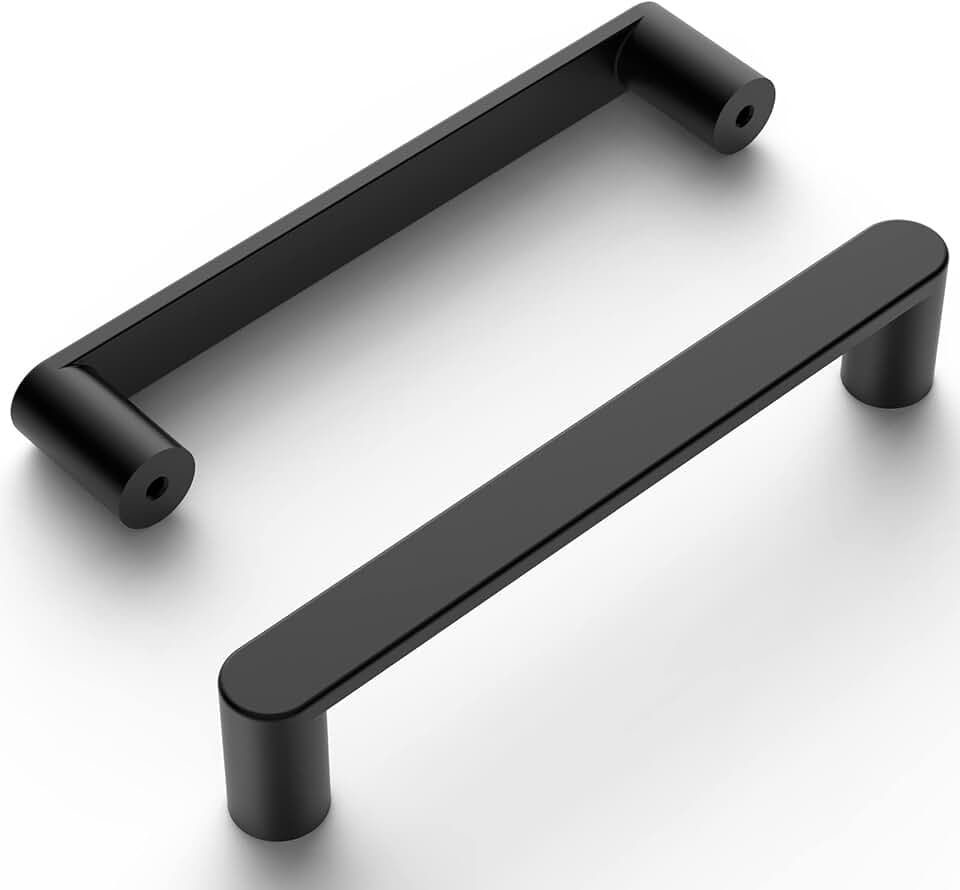


As an Amazon Associate, we may earn from qualifying purchases.
Check material durability and weight
The feel of a cabinet pull tells you about its quality. When you hold a handle, it should feel solid and substantial. This weight comes from the material inside. Choosing the right one ensures your hardware lasts for years.
Solid brass and zinc alloy are top choices for durability. Brass is dense and resists corrosion. Zinc alloy offers a heavy, premium feel at a more accessible price point. Both materials hold up well to daily use. In contrast, hollow plastic or very thin aluminum can feel cheap and may bend or break.
Tip: Solid brass and zinc alloy offer better weight and durability than hollow plastic or thin aluminum.
If you prefer a lighter material, look for thick, cast aluminum rather than stamped sheet metal. The goal is to avoid that flimsy, rattling sensation. A heavier pull also stays firmly attached to the cabinet door, reducing the risk of loose screws.
Hold the pull in your hand. A quality brass or zinc alloy handle will have noticeable heft. If it feels light and hollow, it’s likely made from thin materials that won’t last.
Inspect the base plate and the bar. There should be no gaps or weak points. Solid brass and zinc alloy pulls are typically one piece or securely welded, ensuring they can handle frequent pulling and pushing.
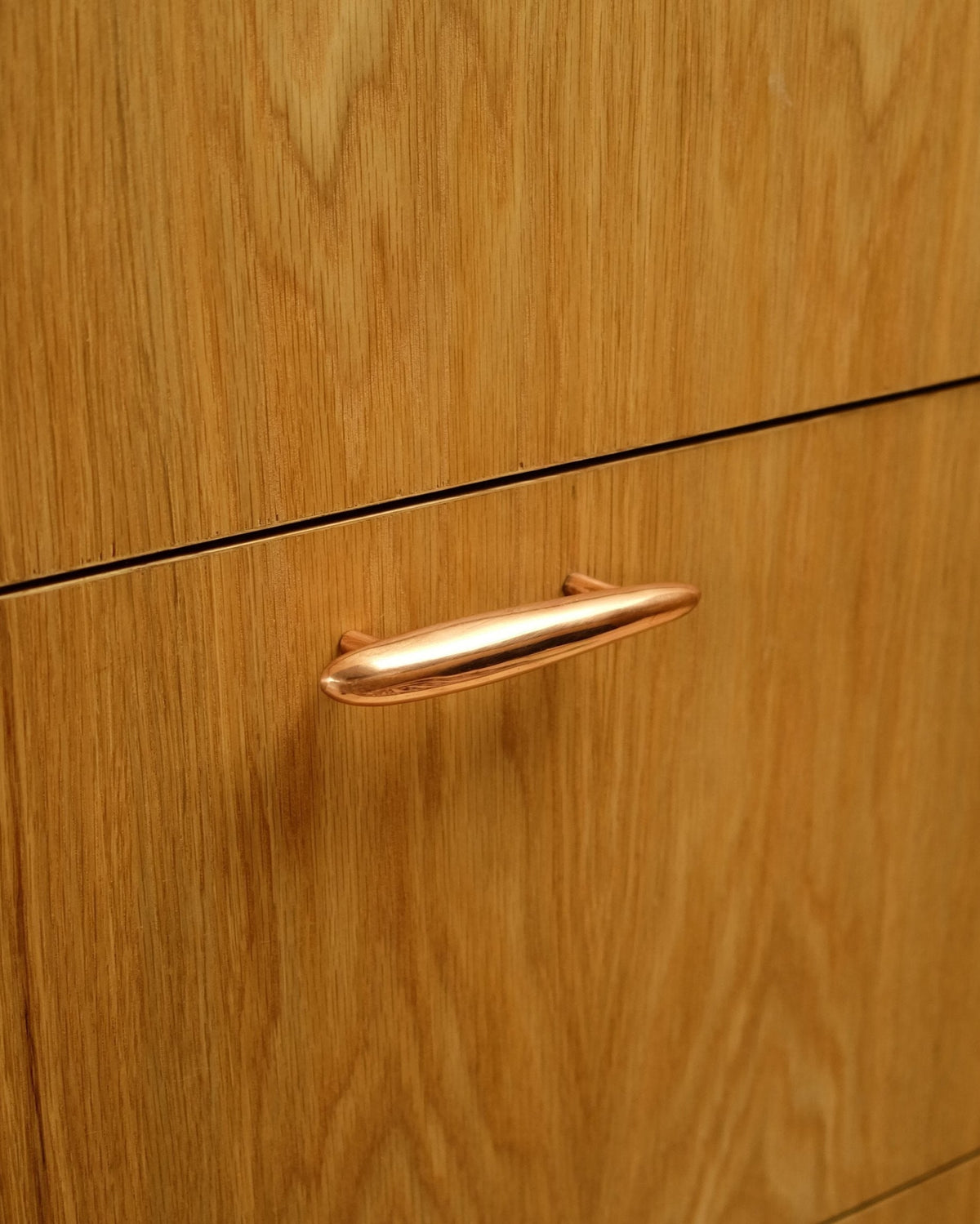
Run your finger along the surface. The finish should be smooth and even. Avoid pulls with rough edges or visible seams, as these can chip or peel over time, especially in high-humidity kitchens.
Install your new modern cabinet pulls
With the holes drilled and cleaned, attach your new hardware. This part is straightforward, but aligning everything correctly ensures your kitchen looks professional.
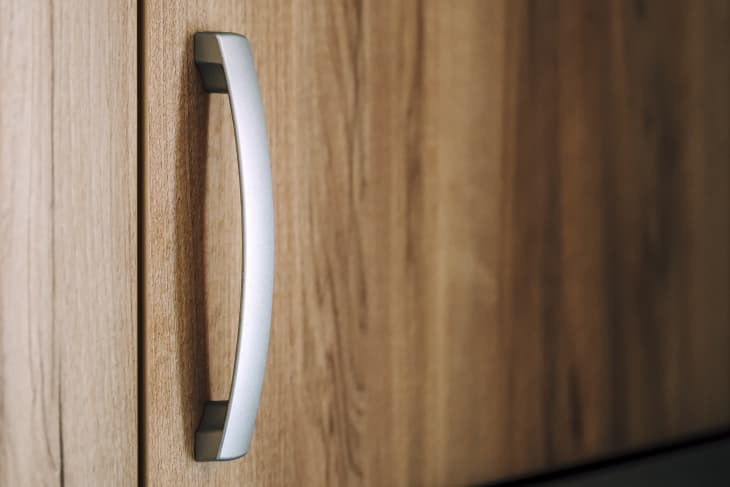
Place the pull against the cabinet door or drawer front. If you are replacing old hardware, use the existing holes as a guide. For new installations, double-check your measurements with a tape measure and a level to ensure the pull is perfectly straight. A small misalignment is noticeable on modern, minimalist hardware, so take your time here.

Insert the screws through the back of the cabinet and into the pull. Start by tightening them just enough to hold the pull in place, but do not fully tighten them yet. This allows you to make minor adjustments to the alignment. If the screws feel stiff or cross-threaded, back them out and try again to avoid damaging the new hardware.

Once you are satisfied with the alignment, use a screwdriver to fully tighten the screws. Be careful not to overtighten, especially on softer metals like brass or bronze, as this can strip the threads or damage the finish. For drawer pulls, give the drawer a quick test to ensure it opens and closes without the hardware rubbing against the cabinet frame.
After installation, wipe down the pulls with a soft cloth to remove any fingerprints or dust. Your new hardware should now be securely in place and ready for daily use.
No comments yet. Be the first to share your thoughts!